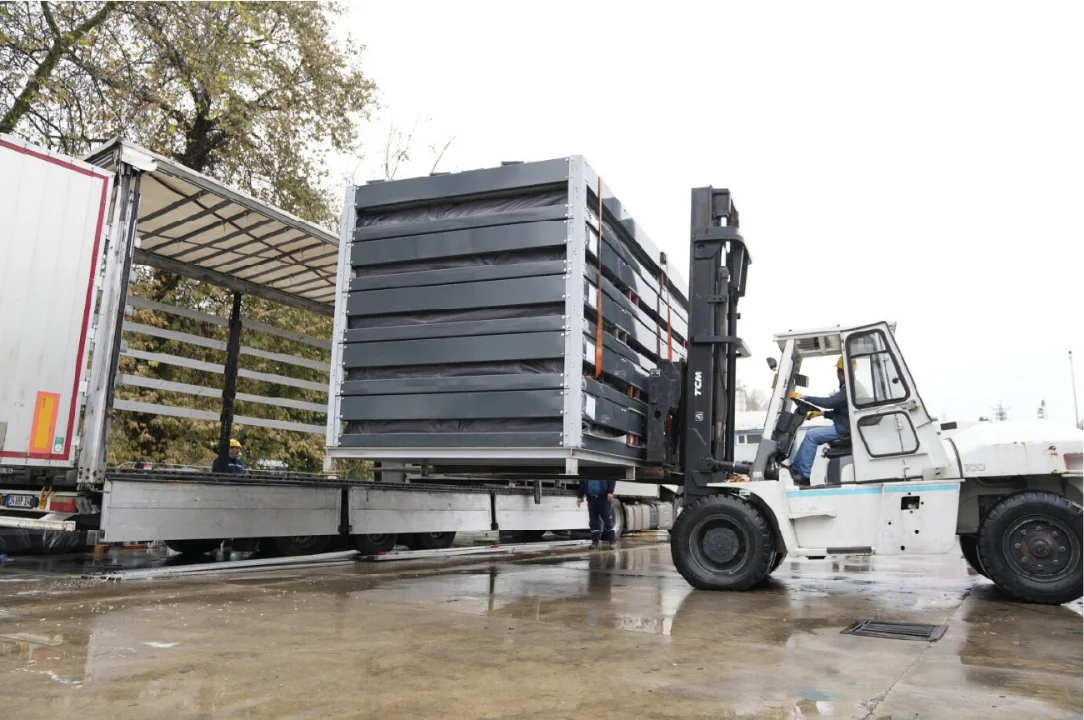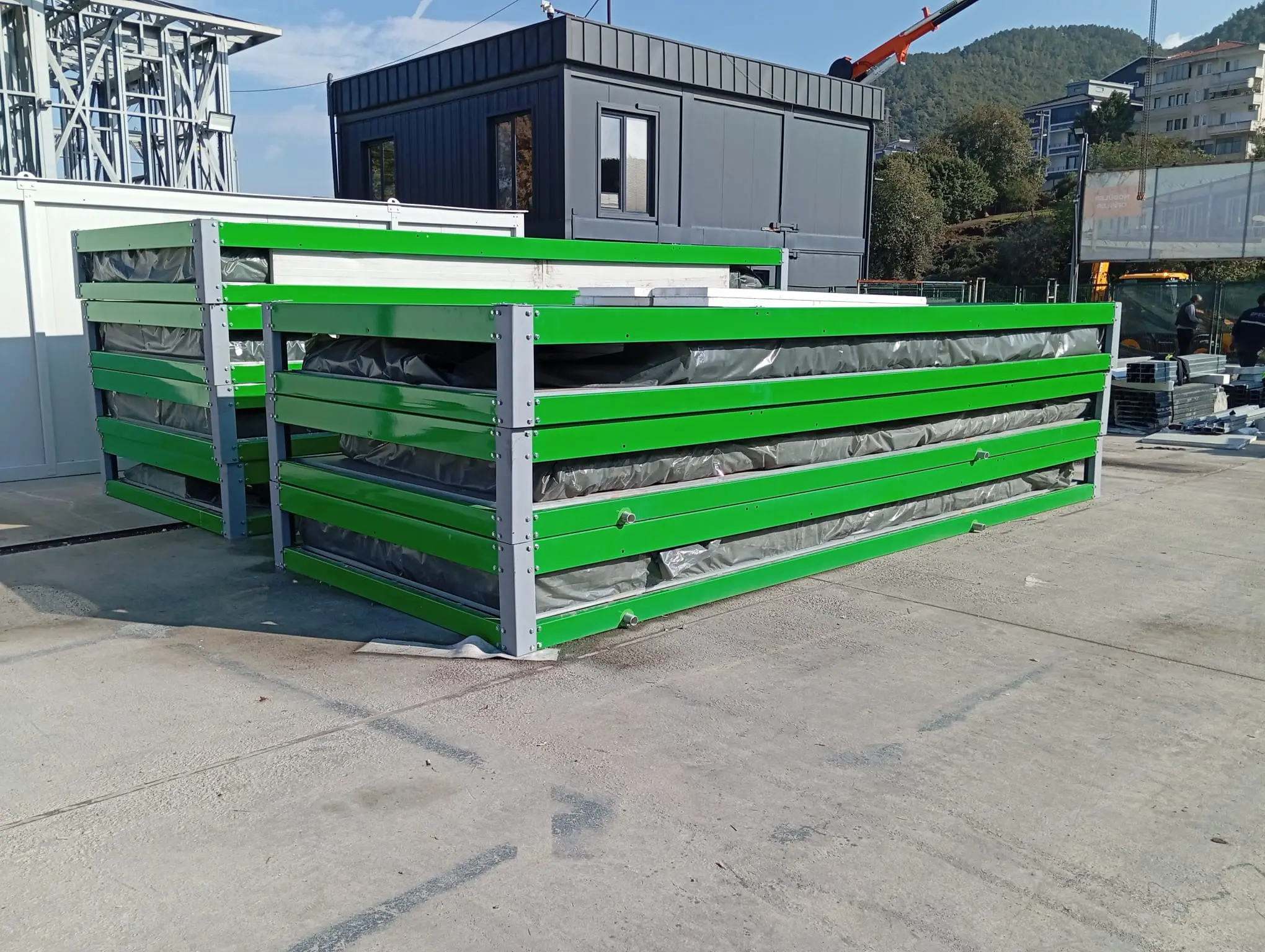
A modular room transported as a compact kit
A flat-pack container is a steel-framed modular building supplied in compact packages and assembled at its destination. The main floor and roof assemblies, columns, wall panels and connecting parts form a room once erected. Doors, windows, insulation and internal finishes are specified for the intended use.
The word container can be misleading. This is a building system, and its delivery format does not make it an ISO freight container or confirm approval for carrying cargo. It also differs from a converted shipping container, which starts with an existing freight-container shell.
What comes in a flat-pack container kit?
The quotation and packing list define the supplied components. A basic room package normally brings together the structure, envelope and connection accessories. Furniture, bathrooms, heating, cooling and external service connections need their own clearly stated scope.
| Component | Purpose | Confirm before ordering |
|---|---|---|
| Floor assembly | Supports the room and floor finish | Floor build-up, insulation and intended loads |
| Roof assembly and columns | Form the primary frame | Connections, drainage and project design criteria |
| Wall panels | Enclose and insulate the room | Core material, thickness and finishes |
| Doors and windows | Provide access, daylight and ventilation | Quantity, sizes and positions |
| Accessories and services | Complete joints and agreed fit-out | Seals, fasteners, electrical scope and loose items |
How does assembly work?
The receiving team first prepares the supports or foundation and checks access for unloading and lifting. Components are checked against the packing list before the frame is erected and the panels, openings and finishing details are installed. The manufacturer’s drawings determine the actual sequence.
Weather sealing, drainage, electrical work and final checks are part of bringing the room into use. Assembly needs a suitable crew and lifting arrangements; a delivery date is not automatically an occupation date. Ask which drawings and supervision are supplied and who completes the site connections.
What are flat-pack containers used for?
Common uses include construction-site offices, meeting rooms, workforce accommodation and support rooms. Modules can be planned as individual rooms or as connected buildings. An office needs furniture and circulation space; accommodation also needs a coordinated sanitary and welfare arrangement.
Connected modules require engineering of openings, supports and joints. Removing a wall does not automatically produce an unobstructed hall. Show the desired clear space on the plan before the structure is agreed.
Flat-pack or monoblock delivery?
Flat-pack supply can make compact transport attractive when several units travel together and an assembly team is available at destination. Monoblock units arrive with the main frame and envelope already assembled, reducing that part of the site work. They still need unloading, positioning and the agreed external connections.
Compare freight, local labour, lifting equipment and the required completion stage together. The lowest factory price does not necessarily produce the lowest installed cost.
What should you send for a quotation?
Start with the destination, quantity, intended use and a room sketch. Add preferred dimensions, insulation requirements, windows and doors, services and the target programme. Describe the local crew and lifting resources so the supplier can separate the building package from the work at destination.
Prefab Turkey can review a single-room brief or a larger modular layout. The proposal should identify what is supplied, what remains at site and which technical details need confirmation before production.
Frequently asked questions
Is a flat-pack container a shipping container?
It is a purpose-built modular building kit. It should not be assumed to have the freight-container certification or cargo-handling characteristics of an ISO shipping container.
Does a flat-pack container arrive ready to use?
No. The kit requires assembly, agreed service connections and final checks at destination. The quotation should identify the responsible parties.
Can flat-pack modules form a larger building?
Yes, subject to project engineering. Openings, intermediate supports, connections, weather seals and services must be coordinated in the approved layout.
This guide supports early procurement planning. It is not a quotation, construction specification or confirmation of local compliance. Final design and supply scope require project-specific review.