The short answer: match the format to your site
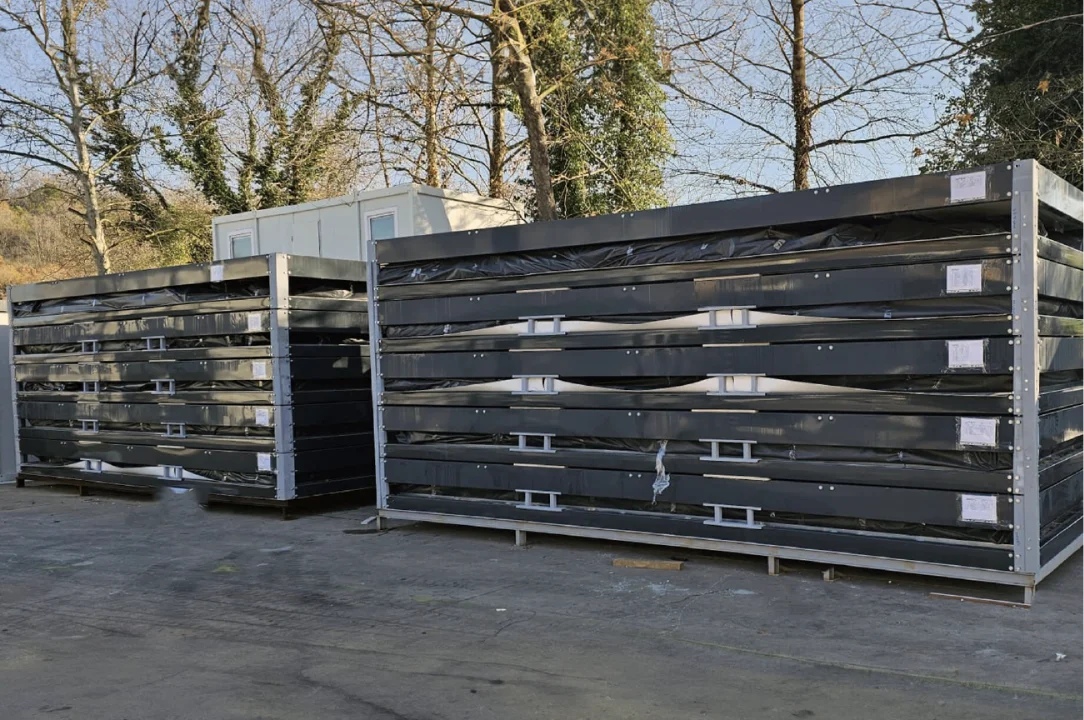
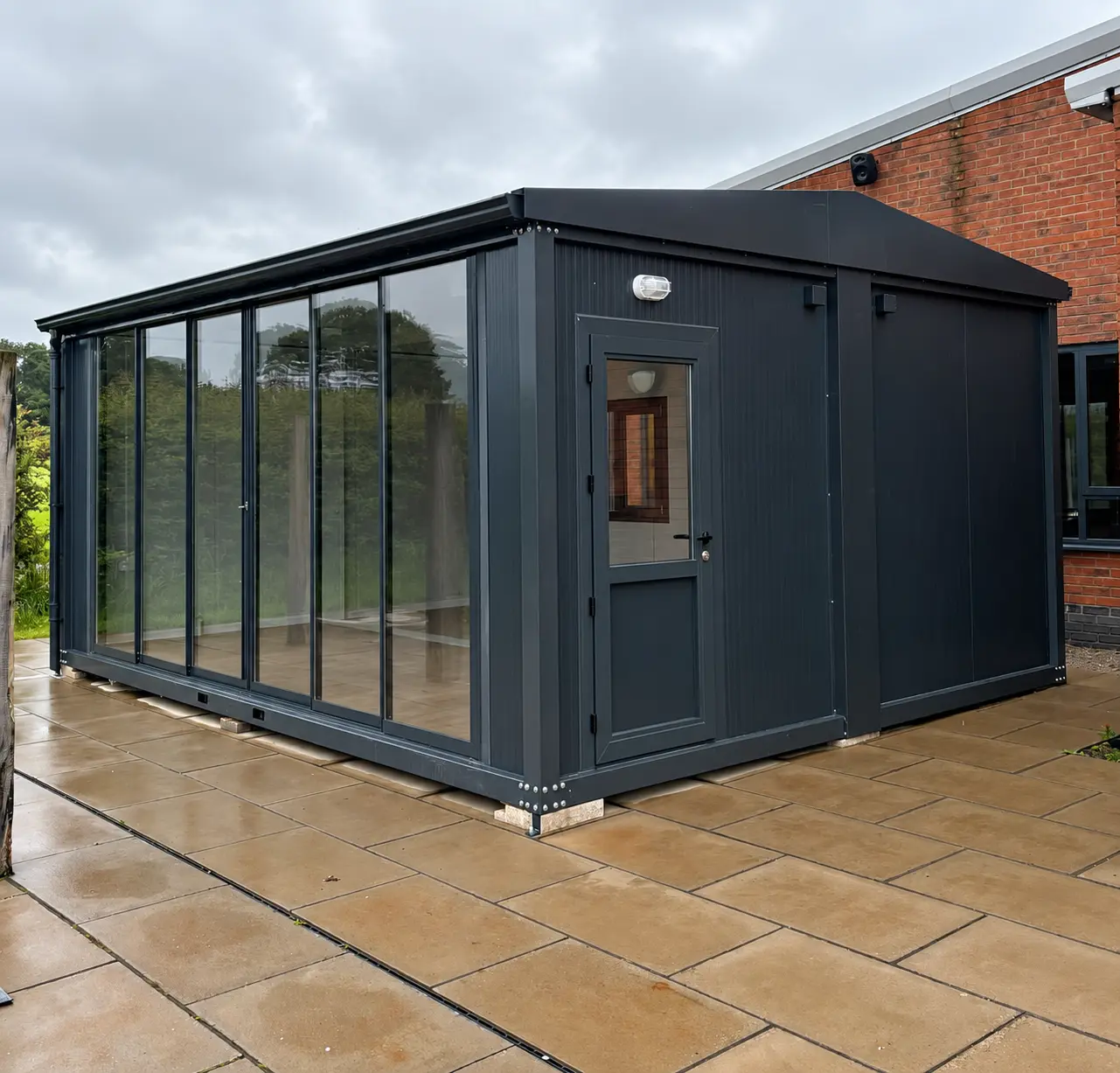
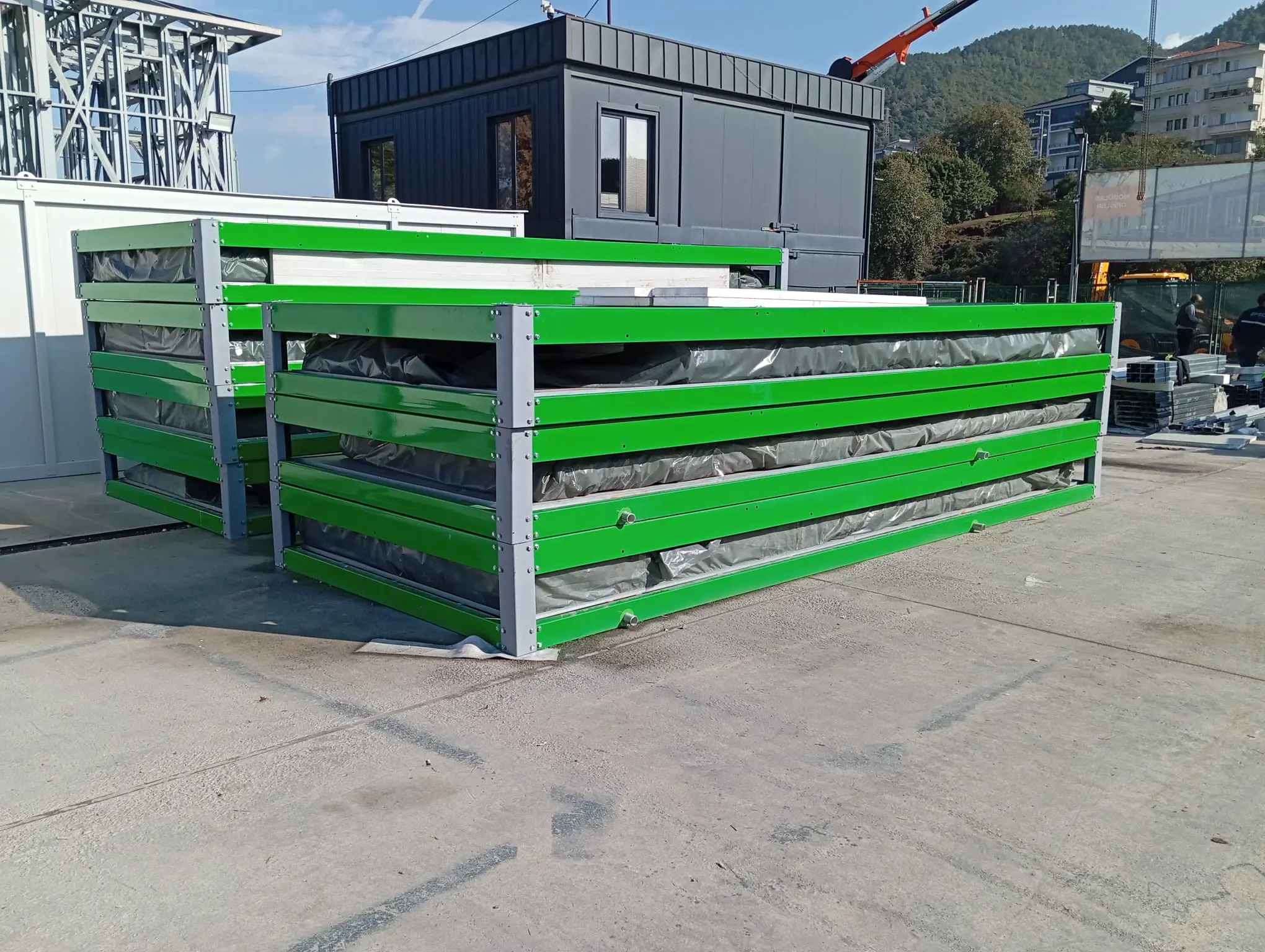
Choose flat-pack supply when transport efficiency matters and you have a capable team to assemble the modules locally. Consider factory-assembled monoblock units when reducing site assembly is the priority and the delivery route can accommodate complete modules. Neither format is automatically the cheapest once transport and installation are included.
For a European site office, accommodation block or welfare building, compare both options against the same layout, performance requirements and opening date. Here, container means a purpose-built modular building unit. It does not mean a converted ISO freight container.
Flat-pack and monoblock at a glance
These are typical differences in delivery format. The quotation and approved drawings should identify the actual level of factory completion.
| Decision | Flat-pack | Monoblock |
|---|---|---|
| Delivery | Frames, panels and accessories packed for assembly at destination. | Three-dimensional modules delivered factory-assembled to the agreed scope. |
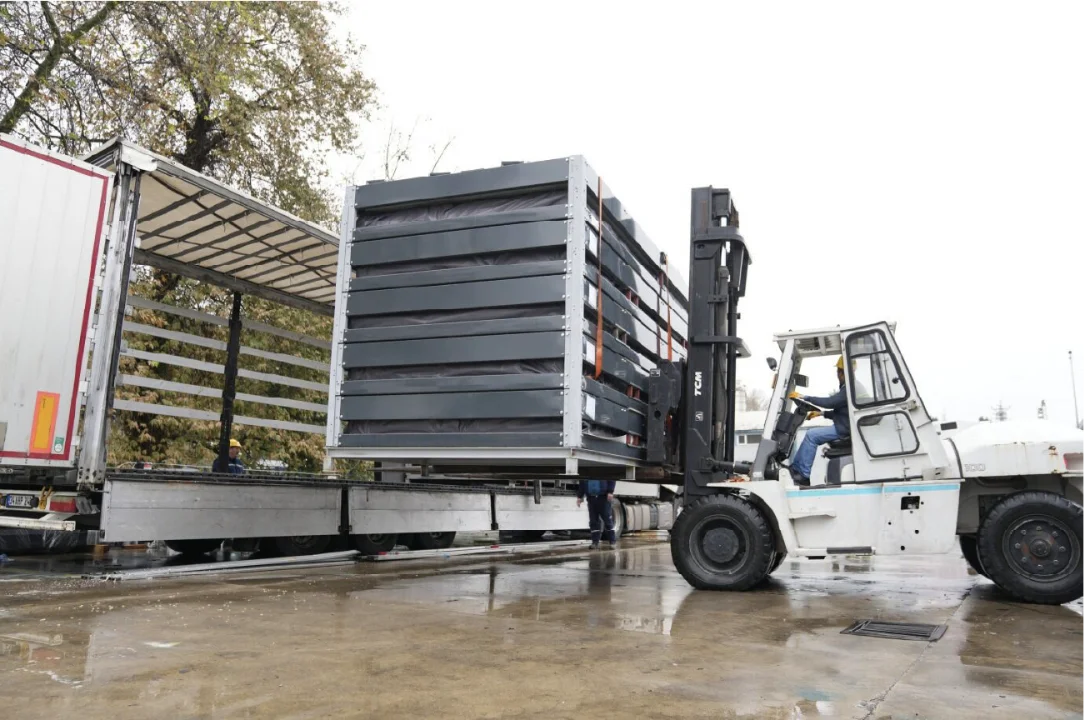
| Transport space | Compact packages can improve loading efficiency across multiple units. | Complete modules occupy more transport volume; route and vehicle selection matter. |
| Site work | Plan assembly labour, handling, weather protection, sealing and service completion. | Plan unloading, positioning, module connections and external service connections. |
| Fit-out | Confirm which electrical, plumbing and interior items arrive installed or loose. | More fit-out can be completed in the factory, subject to the agreed specification. |
| Best starting point | Multiple repeatable units with a suitable local assembly team. | Projects seeking less on-site assembly or more factory-completed interiors. |
Transport to Europe: confirm the route before the dimensions
Ask for a packing or vehicle-loading proposal based on the actual module specification. Panel thickness, glazing, bathrooms, furniture and accessories affect the number of flat-pack sets that fit in a shipment. A basic loading example should not be used as a guaranteed capacity for a fully fitted order.
For monoblock delivery, confirm the completed external width, length, height and weight, including projections. The transporter should check the vehicle, route, access restrictions and any permit requirements. A nominal module width alone does not establish that the complete load can travel without restrictions.
Give the supplier the delivery country and postcode, not just the nearest port. Gate access, turning space, overhead obstructions and the unloading position can affect the final delivery plan for either format.
Compare the total installed cost
Request two quotations with equivalent floor area, layout, insulation, openings and service scope. Then compare factory supply, packing, freight, applicable import costs, unloading, foundations, assembly, supervision, external connections and commissioning. Identify which party pays for each item and use the same delivery basis in both offers.
Flat-pack transport savings may be reduced by local labour and installation costs. Conversely, transporting complete monoblock units may be justified where a suitable site crew is unavailable or the programme depends on completing more work in the factory. Use project-specific figures rather than a universal saving percentage.
- Separate factory price from freight and destination work.
- Include lifting equipment, storage and installation supervision where needed.
- State whether taxes, clearance and delivery to the final site are included.
- Compare the handover date as well as the dispatch date.
Insulation and compliance depend on the specification
Flat-pack describes how the building is supplied; it does not by itself mean lower insulation or a temporary-only building. Monoblock describes an assembled delivery format; it does not automatically guarantee a particular thermal, fire or acoustic performance.
For year-round use, review the complete wall, roof, floor, window, ventilation and heating or cooling specification. Module joints and site workmanship also matter. Give the design team the exact location, use and required performance so the appropriate project documentation and local approval responsibilities can be agreed before production.
Three practical ways to choose
For a small office needed quickly on a prepared site, start by evaluating monoblock delivery and the unloading route. For a larger order of repeated rooms with a competent local installation contractor, evaluate flat-pack logistics alongside the assembly programme. For bathrooms or kitchen units, compare how much fit-out can be completed and checked before dispatch.
A mixed supply can also be worth reviewing: for example, flat-pack rooms with factory-fitted sanitary modules. Confirm the interfaces, sequencing and responsibilities before combining delivery formats. These are starting points for a quotation, not fixed rules.
Request a comparison for your European project
Send Prefab Turkey your delivery country and postcode, required quantity and target delivery date through the quotation form. Add the intended use, a layout or room list, insulation expectations and whether you have a local assembly team. If you are undecided, ask us to compare flat-pack and monoblock supply against the same brief.
Use the product and shipping links below to review the available systems. A clear brief allows the proposal to distinguish factory supply, logistics and the work needed at your site.
This guide supports early procurement planning. It is not a quotation, construction specification or confirmation of local compliance. Final design and supply scope require project-specific review.