Specify the material as well as the thickness
A request for an insulated container is incomplete without the insulation material and the intended conditions of use. EPS, polyurethane and rockwool describe different insulation families. Equal panel thickness does not guarantee equal thermal, acoustic or fire performance.
Start with the destination, seasonal or year-round use, heating and cooling plans and any performance requirements supplied by the local designer. Then compare the proposed wall, roof and floor build-ups together.
What do EPS, PU and rockwool mean?
EPS means expanded polystyrene. PU refers to polyurethane; suppliers may use PUR for a rigid polyurethane foam core. Rockwool refers to stone wool, a mineral-wool insulation. Ask for the precise product designation instead of relying on a shortened description.
PIR is a separate foam specification and should not be silently substituted for PUR. The quotation should identify the selected core and the supporting product documents.
| Option | Identify in the offer | Ask the supplier for |
|---|---|---|
| EPS | Expanded polystyrene core and panel thickness | Declared thermal performance and panel fire classification |
| PU / PUR | Exact polyurethane core and panel construction | Product data, thermal values and relevant fire documentation |
| Rockwool | Stone-wool core and complete panel build-up | Thermal, acoustic and fire data for the specified assembly |
Compare thermal performance using product data
Ask for the declared thermal conductivity of the insulation and the thermal transmittance of the proposed panel. These describe different things: conductivity concerns the material, while transmittance describes heat passing through the stated element. Compare values on the same basis.
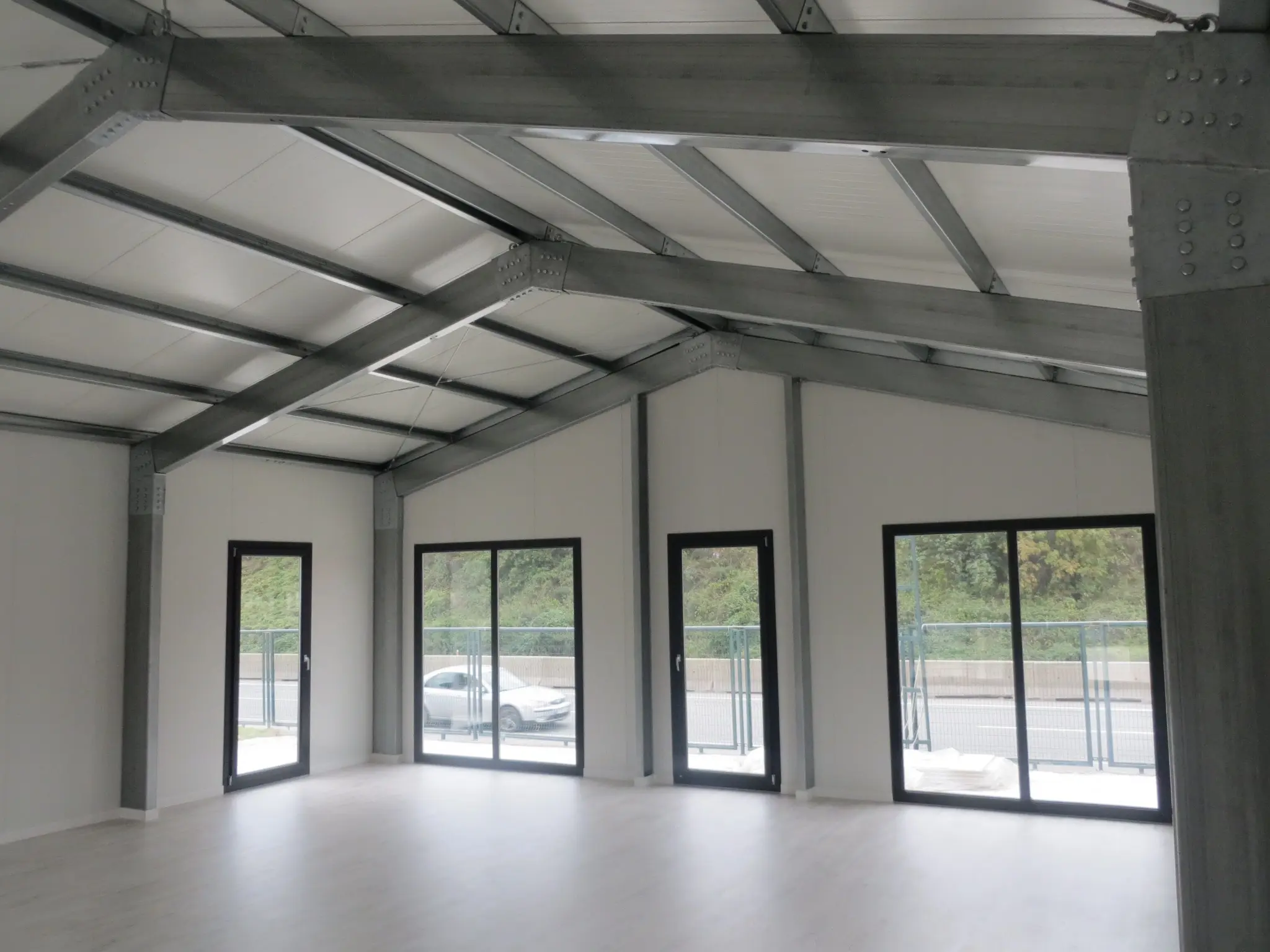
A panel specification does not describe every heat-loss route in a modular room. Steel junctions, window and door frames, the floor, roof and gaps at connections also matter. The full envelope and ventilation strategy should be reviewed for the actual project.
Separate core material from fire performance
Reaction to fire and fire resistance are different assessments. A material or panel classification does not by itself establish the fire resistance of the whole building. Request documentation that matches the proposed product and assembly, including the relevant joints and installation conditions.
The ROCKWOOL sandwich-panel specification guidance illustrates why panel build-up, thickness and manufacturer information must be considered together. It is background reading, not evidence that a Prefab Turkey module has a particular rating.
Look beyond the wall panel
For occupied containers, discuss the roof and floor insulation, ventilation, heating and cooling, window specification and moisture-control details. Bathrooms and shower rooms need a coordinated ventilation and service design as well as an insulated envelope.
For sound control, ask for evidence for the proposed assembly and consider doors, windows and service penetrations. An insulation core name alone is not a sound-insulation specification.
How to request comparable insulation quotations
Give each supplier the same destination, use, dimensions and required performance. Ask them to state the core material, thickness, roof and floor build-ups, windows, ventilation provisions and available documentation. Identify any proposed alternative explicitly.
If you only know the preferred panel thickness, send it as a starting point and ask which details remain to be agreed. Prefab Turkey can review the required insulation scope alongside the layout and delivery format before a final specification is accepted.
Frequently asked questions
Does the same thickness mean the same insulation performance?
No. Compare the declared data for the selected materials and panels, and review the full building envelope.
Does rockwool automatically give the container a fire rating?
No. Any claimed rating must be supported by documentation applicable to the actual product or assembly and its installation conditions.
Should the floor and roof insulation also be specified?
Yes. Wall insulation is only part of the envelope. Include floor, roof, openings, junctions and ventilation in the project review.
Further reading
These references provide background for the topics discussed above. They do not certify the supplied product or establish compliance for your project.
This guide supports early procurement planning. It is not a quotation, construction specification or confirmation of local compliance. Final design and supply scope require project-specific review.